
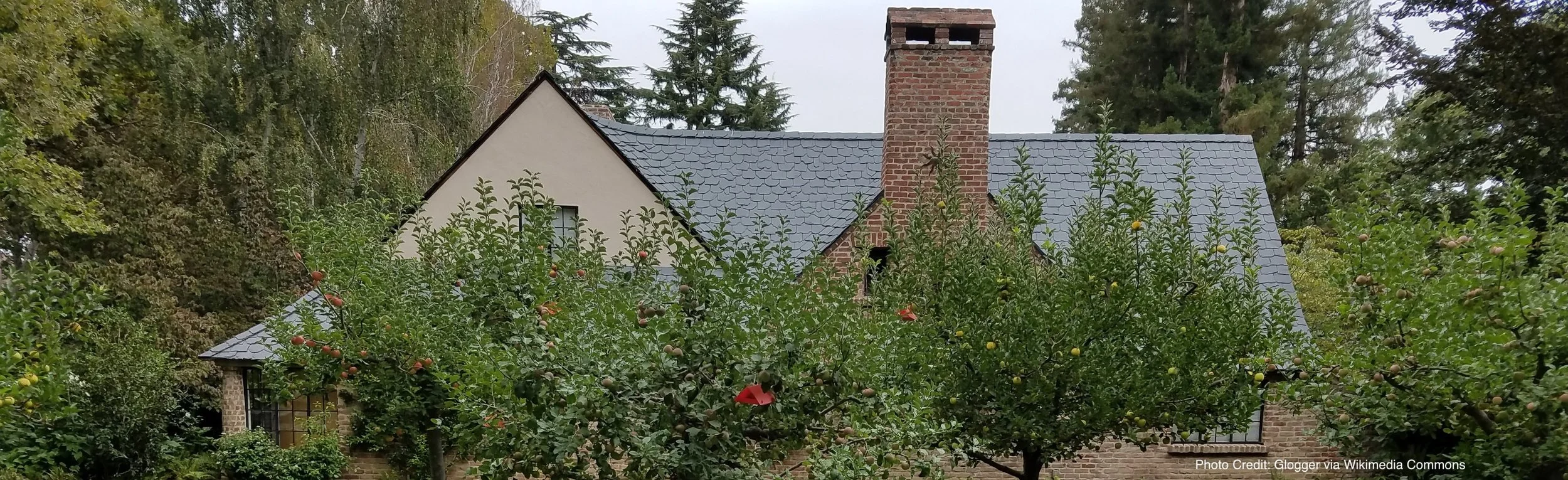
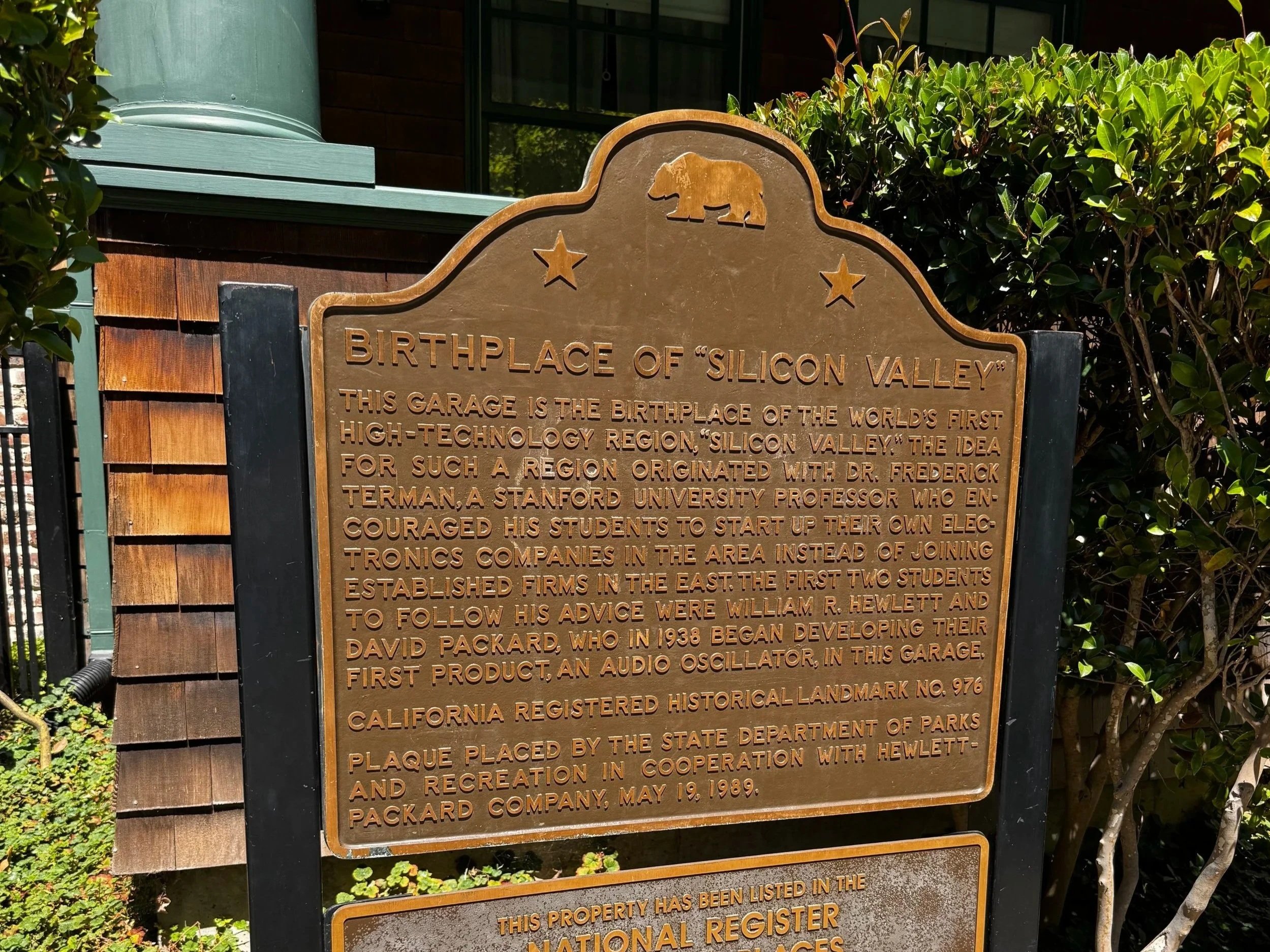
Palo Alto|The Birthplace of Silicon Valley
Stanford University · Top-Ranked Schools · Diverse, Established Community
Palo Alto, adjacent to Stanford University, is widely regarded as one of Silicon Valley’s most defining residential cities. It brings together a strong academic presence, ongoing technological innovation, and a highly mature community fabric. With a balance of urban energy and everyday livability, Palo Alto has long attracted professors, founders, and professionals who choose to put down roots here.
City Highlights | Palo Alto, Silicon Valley
Palo Alto represents one of the clearest intersections of technology and education in Silicon Valley. Closely connected to Stanford University, the city has long fostered innovation, entrepreneurship, and academic excellence. With top-ranked schools, everyday convenience, and an open, intellectually driven culture, Palo Alto continues to attract accomplished families from around the world.
Often considered the cultural and intellectual heart of Silicon Valley, Palo Alto reflects Stanford’s influence not just geographically, but in spirit. Walking through its neighborhoods, you’ll notice a rare balance—academic rigor, technological energy, tree-lined streets, and a deeply established residential fabric—together shaping the city’s distinct character and long-term appeal.
Key Highlights
Technology and education advancing side by side, anchored by Stanford University
Established community fabric with quiet, residential neighborhoods
Classic luxury enclaves such as Old Palo Alto and Crescent Park
Walkable, bike-friendly streets supporting a comfortable, everyday lifestyle
Education Resources
The area is served by the highly regarded Palo Alto Unified School District (PAUSD), one of the most recognized public school districts in the United States.
PAUSD serves grades K–12 and is known for its rigorous academic standards, broad curriculum offerings, and well-resourced schools. Its consistent performance and strong educational foundation continue to attract families who prioritize academic excellence, long-term development, and a supportive learning environment.
Homes & Lifestyle
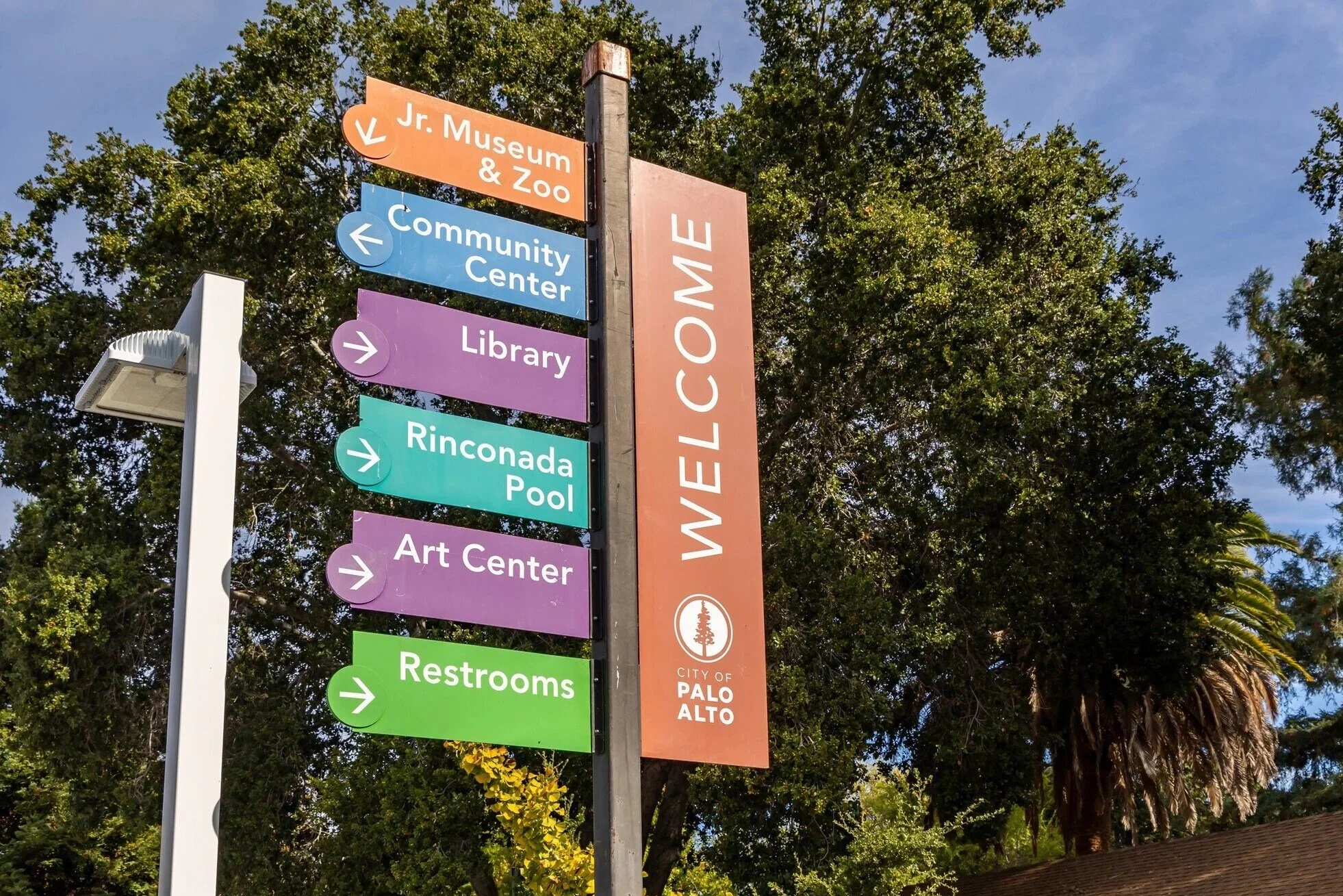
Palo Alto offers a diverse yet highly established residential landscape, accommodating households at different life stages and with varying priorities. Below are some of the city’s most representative neighborhoods:
Old Palo Alto — classic streets, quiet residential character
Crescent Park — wider blocks and estate-style homes
Professorville — historic architecture and strong academic roots
Community Center — proximity to top schools and cultural amenities
Midtown — family-friendly neighborhoods with everyday convenience
From 1920s–1940s Craftsman homes to contemporary single-family residences, as well as legacy estates set along tree-lined streets, Palo Alto reflects a distinctly understated elegance. This balance of architectural variety, livability, and long-term desirability has made Palo Alto one of the most sought-after owner-occupied housing markets in Silicon Valley.
Location & Connectivity
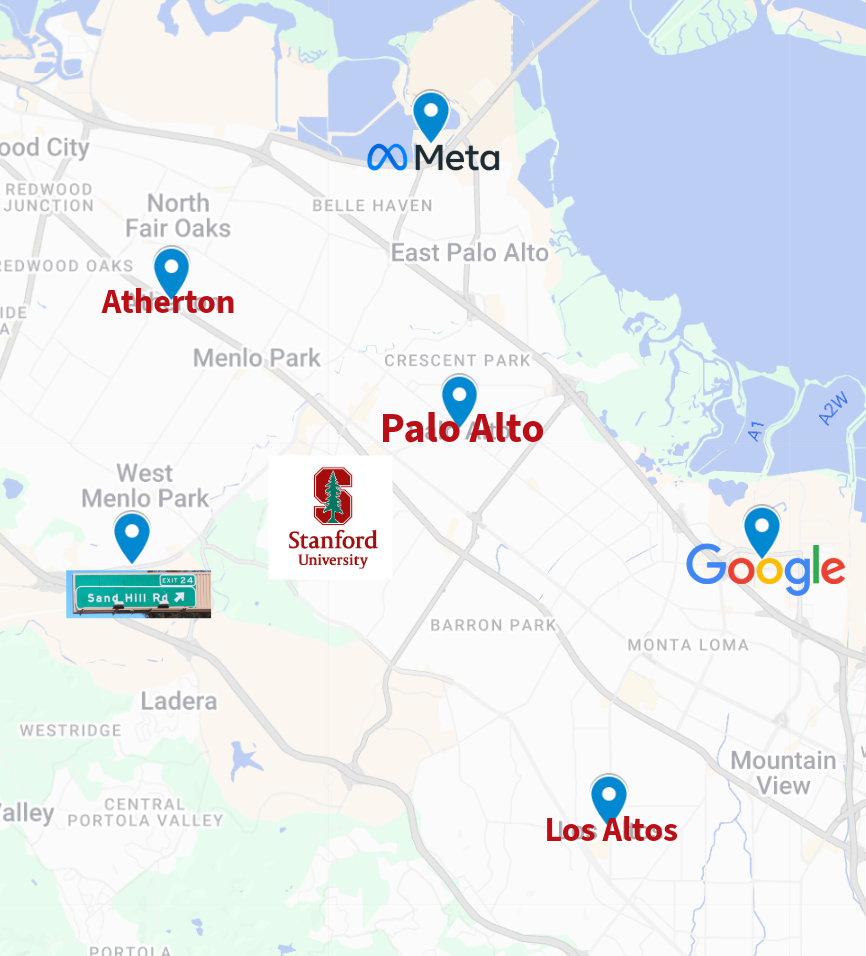
Palo Alto sits at the center of Silicon Valley, with close daily proximity to Stanford University, Sand Hill Road, and major technology campuses—creating an efficient and highly livable commute radius.
Stanford University — approximately 5–10 minutes
Sand Hill Road (global venture capital hub) — approximately 5–10 minutes
Mountain View (Google headquarters) — approximately 10–15 minutes
Menlo Park (Meta headquarters) — approximately 10–12 minutes
Atherton — approximately 5–10 minutes
Los Altos — approximately 10 minutes
Whether commuting to Stanford, Google, Meta, or traveling regularly to Sand Hill Road, Palo Alto offers a rare combination of short distances, manageable traffic patterns, and efficient daily travel. This accessibility is a key reason the city has long been favored by Stanford faculty, technology executives, and founders seeking a well-balanced place to live and work.
Residents & Lifestyle Fit
Palo Alto appeals to residents whose priorities align with long-term value, education, and everyday livability, including:
High-net-worth buyers seeking stable, long-term asset value in an established market
Individuals and families who value an open, diverse, and innovation-driven community
Education-focused households, drawn to Palo Alto’s consistently top-ranked public school system
Professionals who prioritize commute efficiency—whether to Stanford University, South Bay technology campuses, or along the 280 and 101 corridors
Families who value convenience and a mature community environment, with schools, shops, parks, and daily amenities well integrated into residential neighborhoods
Living in Palo Alto is not about keeping up with the times—it’s about standing where the future takes shape.
The city moves at a human pace, yet is continually shaped by ideas, curiosity, and ambition.
Palo Alto resonates with those who seek a rich daily life while remaining closely connected to the forces shaping the world.
-
Palo Alto is widely regarded as one of Silicon Valley’s most desirable residential communities because of its highly overlapping living and working radius with Stanford University, Sand Hill Road, and major technology companies.
Beyond location alone, Palo Alto has long functioned as a place where academia, venture capital, and the technology industry intersect on a daily basis. This sustained convergence of education, capital, and innovation has given the city a long-standing and difficult-to-replicate role within Silicon Valley.
-
Palo Alto’s residential market is defined by established neighborhoods and a wide range of single-family homes, with demand largely driven by long-term owner occupancy.
From traditional high-end neighborhoods such as Old Palo Alto and Crescent Park to communities like Professorville and Midtown—where academic influence and family life naturally intersect—housing styles range from Craftsman and traditional homes to contemporary single-family residences. Overall, Palo Alto reflects a low-key, stable, owner-occupied residential market.
-
Palo Alto is widely recognized for its strong and well-supported public education system, which has long been a key draw for families.
The city is served by the Palo Alto Unified School District (PAUSD), which offers K–12 education and is known for rigorous academic standards, diverse course offerings, and well-resourced schools. The district’s consistent performance and long-term stability continue to attract households that prioritize educational quality and a supportive learning environment.
-
Palo Alto offers a rare balance of everyday convenience and commute efficiency within Silicon Valley.
Neighborhoods are walkable and bike-friendly, with schools, parks, and retail amenities evenly distributed. At a regional level, Palo Alto maintains short and manageable daily commutes to Stanford University, Sand Hill Road, and major employers such as Google and Meta, supporting a practical and low-friction daily routine.
-
Palo Alto most often attracts families and professionals who value education, commute efficiency, and a well-established community environment.
Compared with areas such as Atherton, Woodside, or Los Altos Hills—where larger parcels and privacy are primary priorities—Palo Alto offers a more compact residential pattern and stronger neighborhood connectivity. As a result, it tends to appeal to residents who prioritize convenience, walkability, community engagement, and an active urban rhythm over estate-style seclusion.