
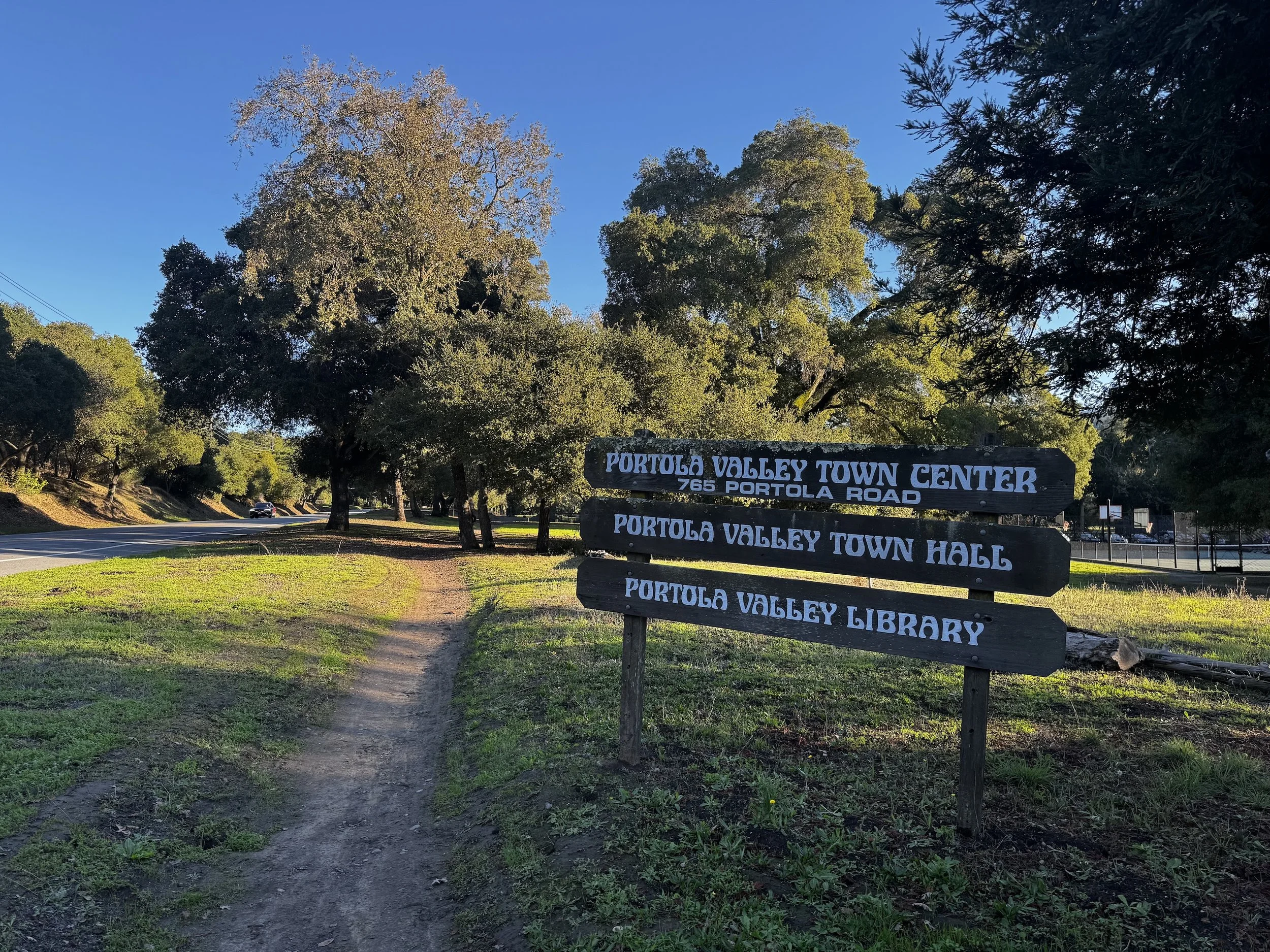
Portola Valley | A Tranquil Retreat in Silicon Valley
Nature-Forward · Low Density · Strong Community
Portola Valley is a distinctive valley residential community known for its open landscapes, preserved open space, and a pace of life that feels intentionally removed from nearby urban centers. Just about 10 minutes from Stanford University and Palo Alto, it offers a markedly different rhythm, quiet, expansive, and deeply connected to nature.
Characterized by wide valley views, extensive permanent open space, low-density residential planning, and a strong sense of community, Portola Valley attracts Stanford faculty, technology founders, investors, and families who value quality of life and long-term livability. It is widely regarded as one of Silicon Valley’s most desirable nature-oriented residential enclaves, where openness, privacy, and community coexist.
Highlights
Portola Valley can be described in four words: calm, natural, community-oriented, and understated.
During the early decades of Silicon Valley’s rise in the 1950s and 1960s, a group of Stanford faculty, technology pioneers, physicians, and professionals sought a place to live that felt close to nature, quiet and restorative, and intentionally non commercial, while remaining within reach of the region’s academic and professional centers.
When Portola Valley was incorporated in 1964, residents made a forward looking decision. The town adopted low density development, extensive permanent open space, strong local governance, and long term preservation of the natural landscape. These principles, carefully upheld by successive generations, continue to shape the community’s way of life today.
Key characteristics include:
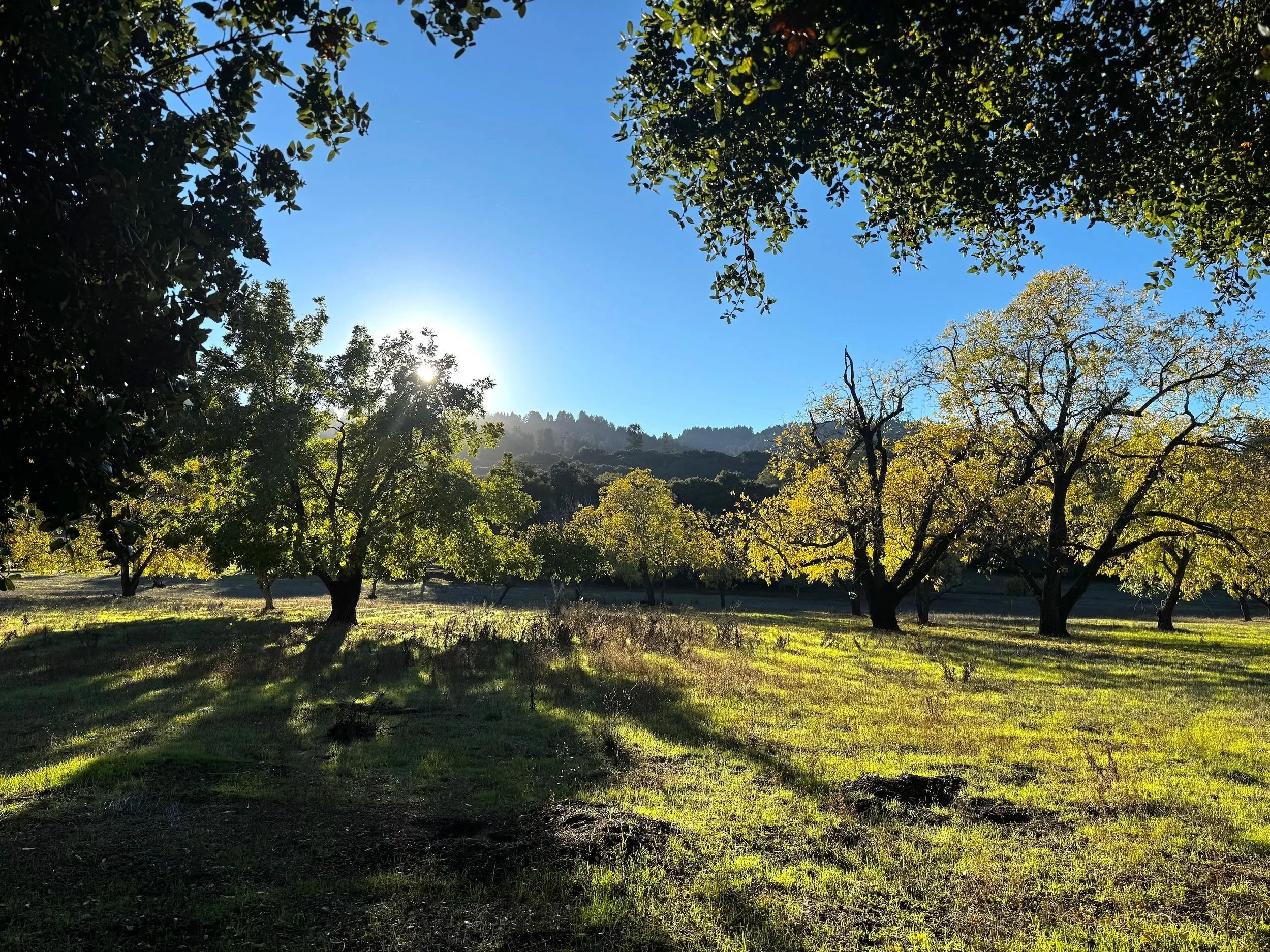
Valley settings framed by forests and open hillside views
A town wide network of trails, cycling routes, and protected natural areas, including Windy Hill Open Space Preserve
Predominantly large residential parcels, with architecture designed to blend quietly into the surrounding landscape
Extremely limited commercial presence, centered on community anchors such as Roberts Market, the hardware store, and the local library
A strong sense of neighborhood connection, with daily life remaining simple, quiet, and community focused
Daily life reflects this balance. Residents take morning walks along wooded trails, cyclists ride Portola Road toward the ridgeline, families in Westridge enjoy sunset views from their terraces, and Stanford faculty, founders, and investors interact informally at Roberts Market.
What sets Portola Valley apart is its ability to remain an enclave of openness and calm within Silicon Valley. It offers a quiet, nature oriented way of life while staying closely connected to the region’s innovation economy.
Education Resources
Education in Portola Valley is served by multiple highly regarded public school districts, and school assignment can vary by neighborhood and specific address. In addition, the area offers a strong selection of private schools, giving families a broad range of education options across both public and private pathways.
Much of Portola Valley is served by the Portola Valley School District (PVSD). Ormondale School (K–3) and Corte Madera School (4–8) are known for small class sizes, strong faculty support, high levels of parent involvement, and a safe, welcoming environment. Many local families describe the experience as having a “private-school feel within a public system.”
Certain areas of Portola Valley, particularly those closer to the Palo Alto Hills, fall within the Palo Alto Unified School District (PAUSD). These locations appeal to families who want to combine a natural residential setting with access to one of the region’s most highly regarded public school systems.
The Ladera area is served by the Las Lomitas Elementary School District (LLESD), one of the Bay Area’s most sought-after K–8 districts, widely recognized for its academic consistency and strong community engagement.
At the high school level, Portola Valley is part of the Sequoia Union High School District (SUHSD). Students are most commonly assigned to Menlo-Atherton High School, though some addresses may instead be zoned to Carlmont High School in the Belmont and San Carlos area. High school assignment can differ even within nearby neighborhoods and should always be confirmed based on the specific property.
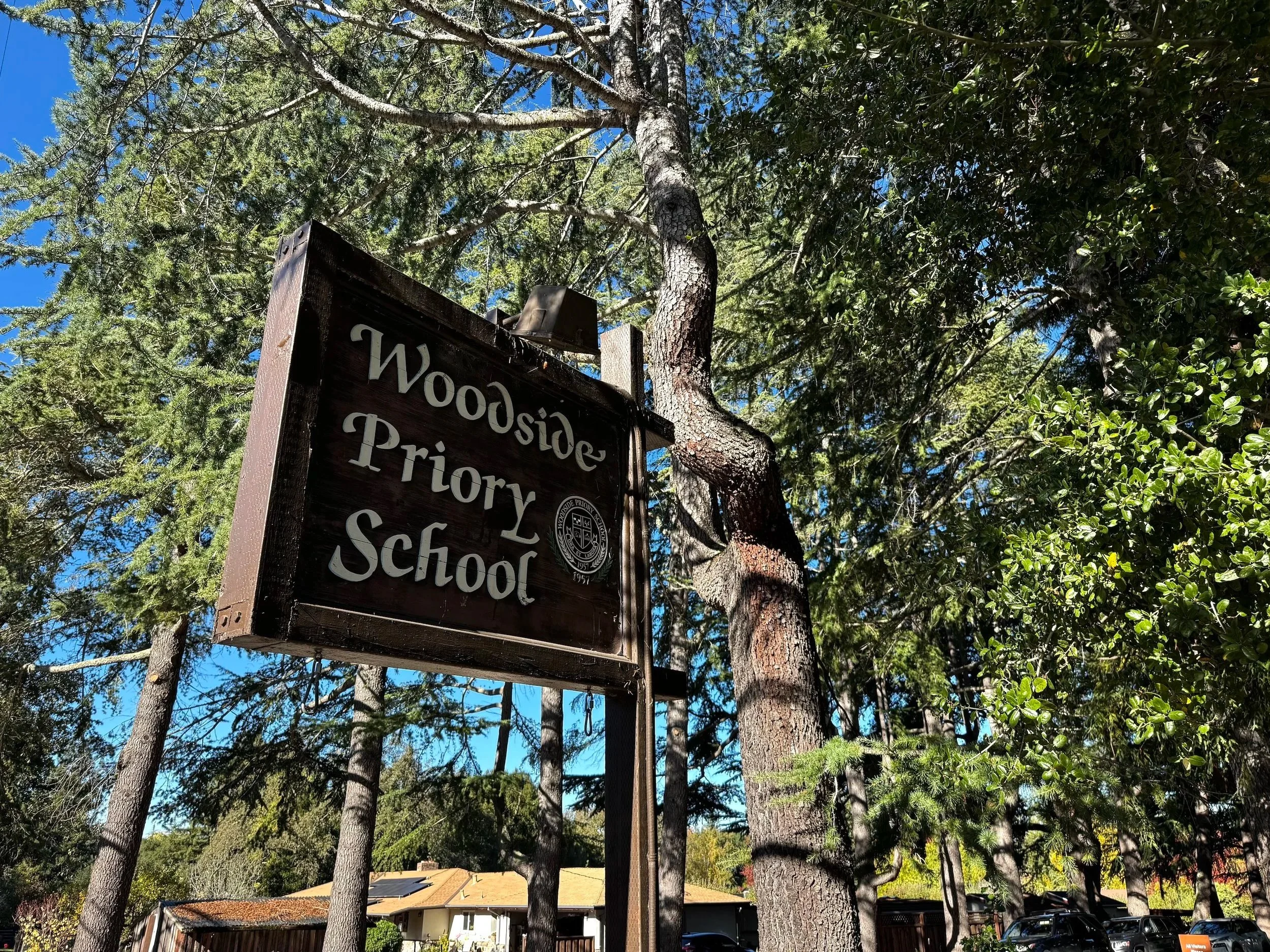
In addition to public schools, Portola Valley is surrounded by several highly regarded private institutions, including Woodside Priory School, Woodland School, Sacred Heart Schools, and Menlo School. Together, these options provide families with long-term planning flexibility across a wide range of educational approaches.
Living & Real Estate
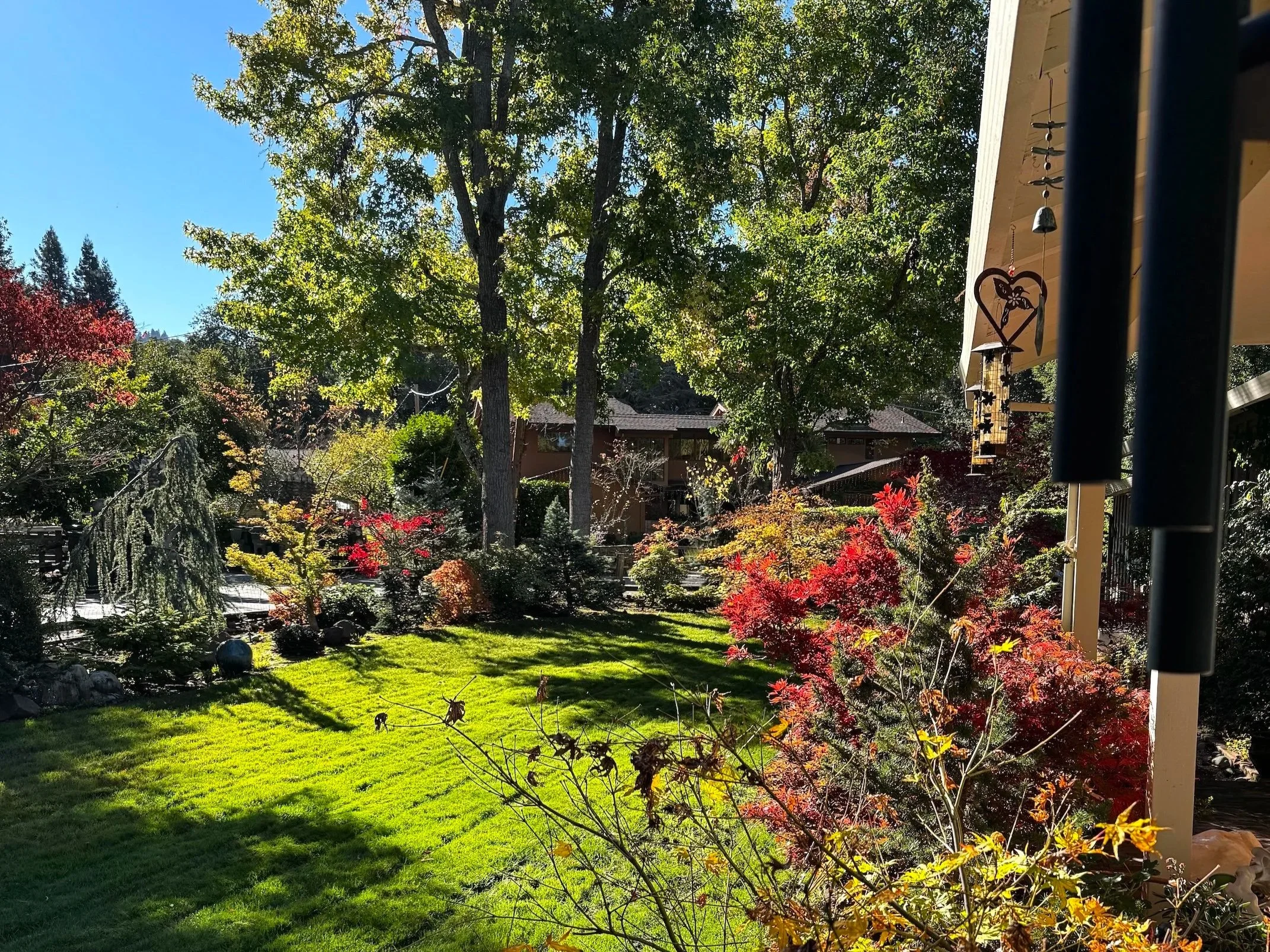
Residential living in Portola Valley is defined by openness, low density, and a quiet, nature-oriented setting. Homes here emphasize comfort, livability, and the sense of ease that comes from being immersed in a natural environment.
Key characteristics include:
Large parcels, typically ranging from 0.5 to 3 acres, with select properties offering even more land
Understated and diverse architectural styles, including mid-century modern, ranch-style homes, and contemporary custom residences
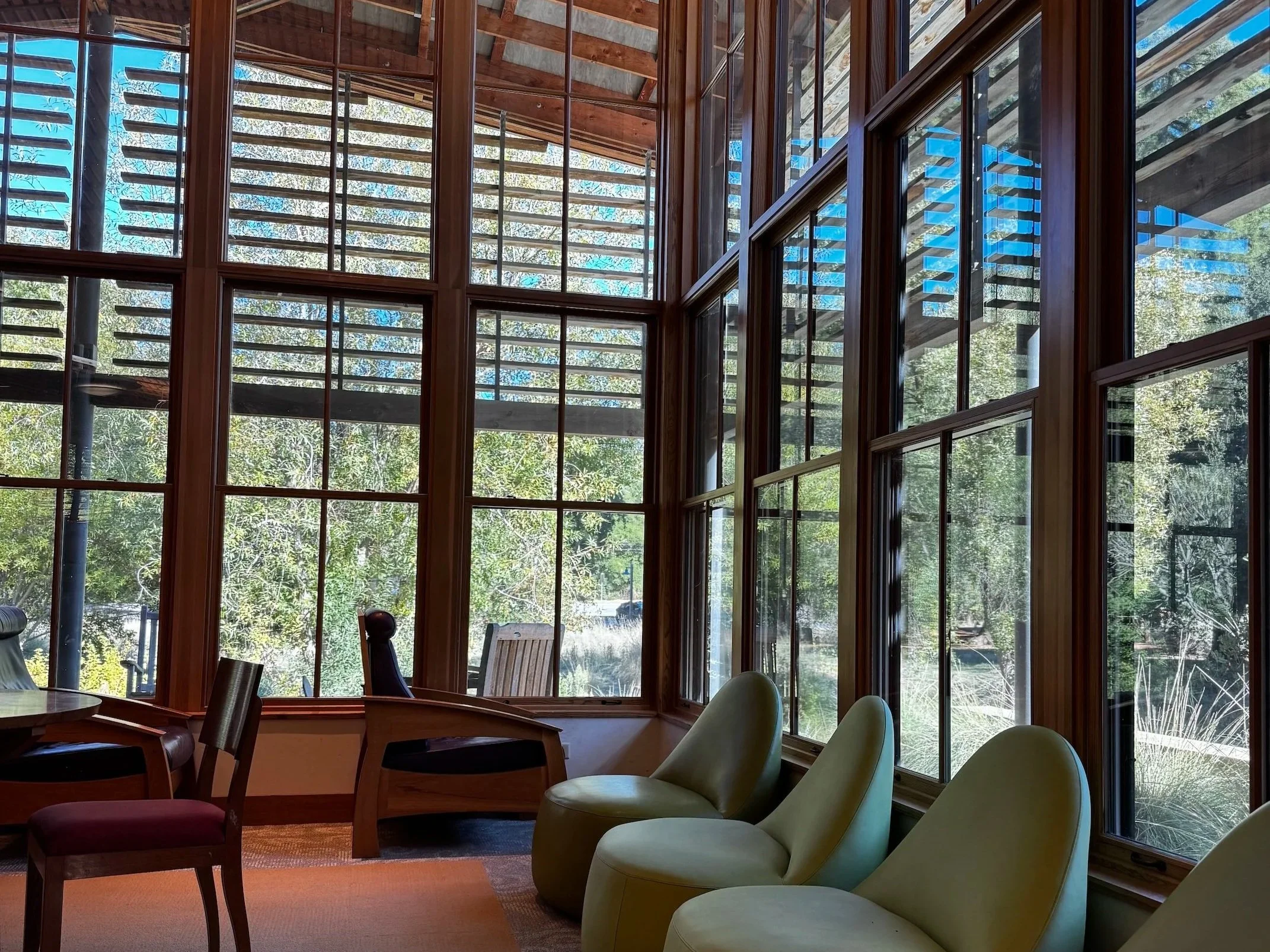
Indoor–outdoor living, with floor-to-ceiling windows, terraces, energy-efficient design, and landscaped gardens that enhance light and openness
High levels of privacy, with generous spacing between homes and quiet residential streets; outside of Alpine Road and Portola Road, through traffic is minimal
Different areas of Portola Valley offer distinct residential character:
Central Portola Valley: closer to local amenities and schools, offering day-to-day convenience and efficient commuting
Westridge: elevated terrain with expansive hillside views, widely regarded as one of the town’s premier residential areas
Brookside Park: flatter topography with a friendly, neighborhood-oriented atmosphere well suited to family living
Los Trancos / Blue Oaks: deeply connected to the surrounding landscape, known for scenic views and a quieter, more secluded setting
Overall, Portola Valley’s residential appeal is rooted in land scarcity, long-standing low-density planning, a stable community structure, and a distinctive nature-centered lifestyle. These factors have made it one of Silicon Valley’s most sought-after markets for hillside and valley homes that prioritize space, privacy, and long-term livability.
Location
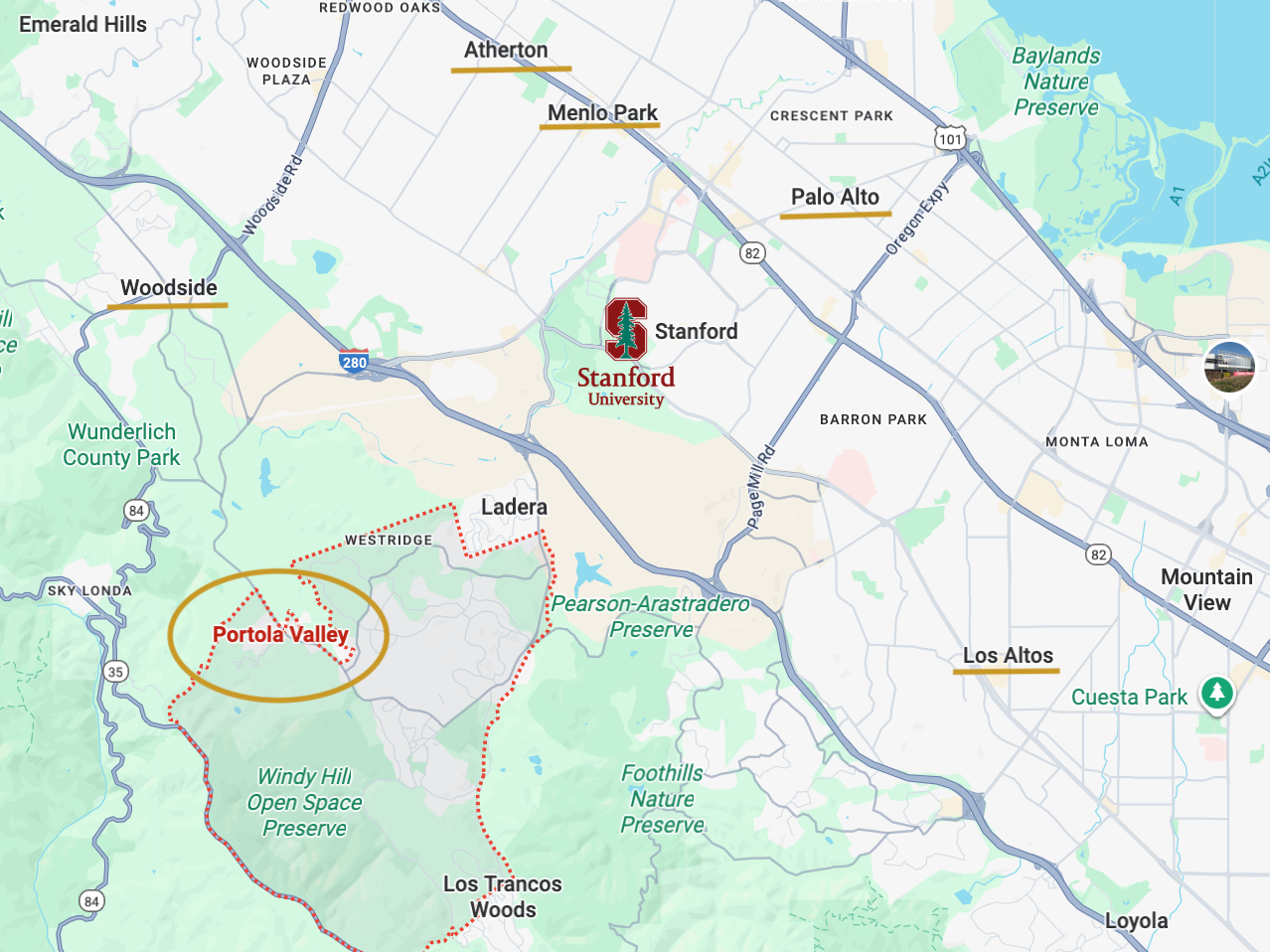
Portola Valley offers a quiet, understated residential setting while remaining closely connected to Silicon Valley’s primary living and employment centers. Daily commuting is efficient despite the town’s calm, low-profile character.
Approximate distances include:
Stanford University — approximately 10-15 minutes
Sand Hill Road — approximately 8–10 minutes
Palo Alto — approximately 10–15 minutes
Menlo Park — approximately 10–15 minutes
San Francisco International Airport — approximately 30 minutes
Similar to Woodside, Portola Valley benefits from convenient access to Interstate 280, allowing smooth north–south travel while avoiding the congestion commonly associated with Highway 101. This positioning enables residents to maintain privacy and immersion in nature while staying closely connected to Silicon Valley’s technology and innovation corridor.
The result is a rare balance: a natural, low-density environment paired with highly efficient regional access, making Portola Valley one of the Silicon Valley’s most distinctive residential locations.
Residents & Lifestyle Fit
Portola Valley is well suited for residents who value nature, privacy, and a balanced, community-oriented way of life—while remaining closely connected to Silicon Valley’s academic and professional centers. It particularly appeals to:
Those seeking a retreat-like living environment without sacrificing location, with convenient access to Stanford University, venture capital firms, and nearby technology hubs
Families who appreciate natural surroundings, including hillside settings, open space, and expansive valley or mountain views
High-net-worth buyers looking for a quiet, low-density residential setting, offering strong privacy alongside a genuine sense of community
Families who prioritize smaller-scale, high-quality public education environments, and value long-term educational continuity
Residents drawn to outdoor-oriented lifestyles, such as hiking, cycling, running, or equestrian activities
Portola Valley, shaped by nature and space, a quieter way of living.
Away from urban noise, yet never disconnected from the heart of Silicon Valley,
it offers something increasingly rare: room to breathe, think, and simply live.
Open. Understated. Deeply human.
A place where calm is not curated, but naturally felt.
Portola Valley FAQs
-
Portola Valley is distinctive for its rare combination of low-density planning, permanently protected open space, and close proximity to Silicon Valley’s academic and professional centers.
Surrounded by open valleys, forested hillsides, trail networks, and nature preserves, the town maintains a quiet, nature-oriented way of life while remaining approximately 10–15 minutes from Stanford University and Palo Alto.
Its emphasis on conservation, limited commercial development, and strong community stewardship has preserved a lifestyle that is increasingly rare in Silicon Valley—one defined by openness, calm, and long-term livability.
-
Homes in Portola Valley are primarily large-lot, low-density residences designed to integrate with the natural landscape.
Typical property types include mid-century modern homes, ranch-style residences, and contemporary custom homes, with most properties situated on parcels ranging from approximately 0.5 to 3 acres.
Residential character varies by area: Central Portola Valley offers convenient access to daily services, Westridge is known for elevated views and estate-style homes, Brookside Park appeals to families seeking flatter lots and community feel, while Los Trancos and Blue Oaks attract buyers who prioritize privacy and proximity to open space.
-
Education in Portola Valley is served by multiple highly regarded public school districts, and school assignment can vary by neighborhood and specific address.
Most of the town is served by the Portola Valley School District, with Ormondale School (K–3) and Corte Madera School (4–8), both known for small class sizes, strong community involvement, and a supportive learning environment.
Some areas fall within the Palo Alto Unified School District, while the Ladera area is served by the Las Lomitas Elementary School District. At the high school level, students typically attend Woodside High School within the Sequoia Union High School District, though certain addresses may be assigned differently.
In addition, Portola Valley is surrounded by well-regarded private schools, providing families with a wide range of educational options across both public and private pathways.
-
Portola Valley attracts residents who value privacy, natural surroundings, and a calm, community-oriented way of life, while remaining closely connected to Silicon Valley.
The town is well suited for families who appreciate open space and mountain or valley views, buyers seeking a low-density residential environment, and households that prioritize long-term livability over short-term convenience. It is also popular among professionals, entrepreneurs, and Stanford-affiliated residents who want proximity to work without an urban residential setting.
-
While Portola Valley maintains minimal commercial development, daily life and commuting are highly efficient.
Local essentials such as Roberts Market, dining options, and community services are located within the town, while more extensive shopping, dining, and healthcare are easily accessible within 10–15 minutes in nearby communities.
With close access to Interstate 280, residents benefit from smooth north–south connectivity while avoiding the congestion commonly associated with Highway 101. Portola Valley offers a rare balance: a peaceful residential environment combined with excellent access to Silicon Valley’s key destinations.